Welcome! 

This blog is dedicated to the practice of the art & science of court reporting. It is a wired wilderness where work and play come into balance via creativity and self-expression.  

As one seeking wholeness, this blending of passion and purpose is an inextricable part of my life's work. Thank you; I appreciate that you're here.

Setting up audio for remote court hearings


Here's an update to share my audio setup for virtual court hearings conducted via Zoom or other videoconferencing software. This arrangement uses two male to female 3.5mm audio splitters and two male to male mini-phone audio cables

First you plug the single male end of splitter #1 into the audio output jack of the device on which you're running the video/teleconference software, pictured here by the iPhone 6S plus. Then audio cable "A" connects the microphone input jack of the steno machine to one of the female slots on splitter #1.

The male end of splitter #2 gets plugged into the other female opening of splitter #1. Audio cable "B" connects one female slot of splitter #2 to the microphone input of the laptop I run my CAT software on. Headphones plug into the second female slot of splitter #2, and voila, you're off to the races.

My current typical arrangement is to run Zoom on one laptop (instead of the iPhone) and my CAT software on a second computer. When on a video conference call, that's the only program I run at that time on that device, so as to free up more processing power and hopefully avoid lags in the video/audio.

In my opinion, the audio quality captured this way is better than just pointing my audiosync mic at the speakers on a computer. Note: this setup will only work for devices that have 3.5mm audio ports, so this is not what to do if you're videoconferencing on a newer iPhone without a headphone jack.

Interesting Article Alert

Source

Today is a good day to share an article, Practice Makes Possible, that I happened upon while cruising the Internet. Hope it inspires you too!

This article shares information debunking the "natural talent" myth and discusses how consistent, deliberate practice can help people grow their skills beyond their previous limits. That definitely sounds like it applies to someone interested in improving their stenography writing speed.

Talent is a pursued interest. Anything that you’re willing to practice, you can do.” -- Bob Ross

At the end of the write-up, there's also a link to an excerpt of the book mentioned, Peak, in which a specific example is given of how to push through plateaus, perhaps. My to-read list just grew by one.

The Case for a Fresh Start After Freelancing


Like the dawn of each new day brings a fresh start, so too may a court reporting career be re-created anew. After seven-plus years of self-employed deposition reporting and a brief stint doing CART work for a college, accepting a position as an official court reporter in 2019 has once again invigorated my love for stenography. For example, I’ve co-facilitated an A to Z intro to machine shorthand class to promote our profession, and it was successful, so there’s already a second session scheduled in 2020. Extra dictation practice while preparing for my RMR certification has improved my speed, and I’ve had the opportunity to build my dictionary & fine-tune my writing style since arriving at the courthouse.

I’m aware of the negative talk in the depo world about big box agencies, page rates, contracting, etc., and after speaking with a brilliant reporter down the hall, we agree that there’s a simple solution, and that’s for veteran freelance reporters to give serious consideration to filling a vacant officialship. In the state where I work, there are currently at least 13 openings, and putting qualified stenographers in those offices will go a long way to uphold the value of the skill set that we possess.

At the risk of this starting to sound like a persuasive essay, the good pay, health benefits, vacation time, interesting subject matter, and daily interaction with amazing coworkers make me wonder why I didn’t take the leap sooner. It’s still a bit surprising how enjoyable this new opportunity is, especially considering that as a student and new reporter, I never thought I'd work in court. Things often happen for a reason, though, at the exact, right time as we are guided along our paths in life.

People who have a meaningful reason to get up each morning often do so cheerfully. If you're feeling stagnant in your career, I hope you’ll give yourself the gift of new experiences by pivoting.

I Needed Color -- Jim Carrey Paints

Did you know that Jim Carrey paints?
This video surprised and inspired me, so I added captions to it.

Some great Jim Carrey quotes from this video are:
  • "What you do when life chooses you, you can choose to not do it. You can choose to try to do something safer. Your vocation chooses you."
  • "I think what makes someone an artist is they make models of their inner life. They make something physically come into being that is inspired by their emotions or their needs or what they feel the audience needs."
  • "Art has to be service. You know, it's like you're servicing your subconscious. And at the same time you're doing something that someone's going to relate to, hopefully."
  • "The energy that surrounds Jesus is electric. I don't know if Jesus is real, I don't know if he lived, I don't know what he means, but the paintings of Jesus are really my desire to convey Christ consciousness. I wanted you to have the feeling when you looked in his eyes that he was accepting of who you are. I wanted him to be able to stare at you and heal you from the painting. You can find every race in the face of Jesus, and I think that's how every race imagines Jesus. They imagine him as their own."
  • "Something inside you is always telling a story."
This took me 13 minutes to transcribe, which is roughly double the length of the video, and then another 42 minutes to clean it up, complete the sync, review, and publish. Enjoy!


Playing With Words


I've always loved word games, so here is a little nudge towards
playtime in the form of some scrambled words to unravel. Enjoy!

(Answers in English and machine shorthand after the jump break.)

The quick brown fox jumped over the lazy dog

"The quick brown fox jumped over the lazy dog."

"Now is the time for all good men to come to the aid of their country."

I start just about every realtime translation by writing those phrases on my steno machine. The first is a pangram, which, I've written about before here, is a sentence using every letter in a given alphabet. They're often used for keyboarding practice and displaying typefaces, etc.

Hallelujah

 (This post contains affiliate links.)
(Source)

The song Hallelujah in the video below has a special place in my heart. It has such a beautiful and captivating melody! This is subtitled with Amara, a free Web based program for captioning videos, and the captions can be toggled on and off with the CC button located near the slider. I tried subtitling with Amara, and it was easy to work with and goes quicker the more familiar with the keyboard shortcuts I get and with the use of a foot pedal recently acquired at a second-hand store.

What a good song to practice steno to!

Wherever you go...


Here's a little love & light as I take steps toward achieving my goals. When I am my naturally positive self and focus on the good, more awesome things happen in my life.
STEUBG W- EUT! (Stick with it!)

Beyond words

In the course of our careers, we stenographers get really good at sharing the narratives of others. Our brains and bodies work together with machine shorthand and turn sound waves into text on a page or screen to communicate what was said.

The testimony I hear and transcribe is often beyond words, and I couldn't talk about it even if I wanted to; so more and more, making art has become one of my favorite means for self-expression. This practice, whether it's sketching, coloring, or maintaining an art journal, puts me in a great mood, probably by helping to release emotions and pent up energy from working in this intense but rewarding field. When I'm able to creatively express myself, my days are just somehow more awesome.

What is your favorite creative outlet?  Feel free to share in the comments.

Work & (Game) Play


I used to think that work and play were mutually exclusive. Well, it turns out that they're not, so what would be better than combining the two? Not much. For that reason, I want to share with you an awesome way to practice steno while having fun. After all, time flies when the latter occurs.

Removing Paint From Countertops

This post contains affiliate links, which you can read more about here.


Counter paint is figurative bovine excrement. (There. That feels better.)

What I meant to say is, "Have you ever wondered how to remove decorative paint from your countertops?" Well, wait no longer. My husband and I have done just that, and since the Internet is devoid of tutorials for such a thing -- I looked; trust me -- here's how one would do it.

The art of stenography


They say a picture speaks a thousand words, so I'll be brief.

This marker drawing of a Diamante steno machine was completed in honor of Court Reporting and Captioning week, February 14-20, 2016. It represents the amazing opportunities that stenography offers the willing student and shows my appreciation for it and all other forms of art. This design is available for purchase as wall art, a tote bag, travel mug, or even a throw pillow, so get yours now!

Hiatus

In every education, career, relationship, story, year, or life, there is a beginning, middle, and an end. In my case it's been a bunch of satisfying whirlwind middle where I could barely keep my hat on nor wipe the smile off my face.

A lot has happened since 2012, when I last wrote: I co-planned a high-class $4,000 wedding and reception in six months, got married, went on several vacations & business trips, bought a house, and gotten through some challenges that make me strive for continual improvement. Maybe I'll write about some of these things someday, but nevertheless this is adulting at its finest!

I've been through some self-discovery, my priorities have changed a bit, but my core being has remained. Steno and court reporting has been an amazing constant in my life, and I'm still a creator at heart who just wants to share my insight and experience with those who will listen, so I do hope you'll continue on this journey with me.                  

Nama-steno.

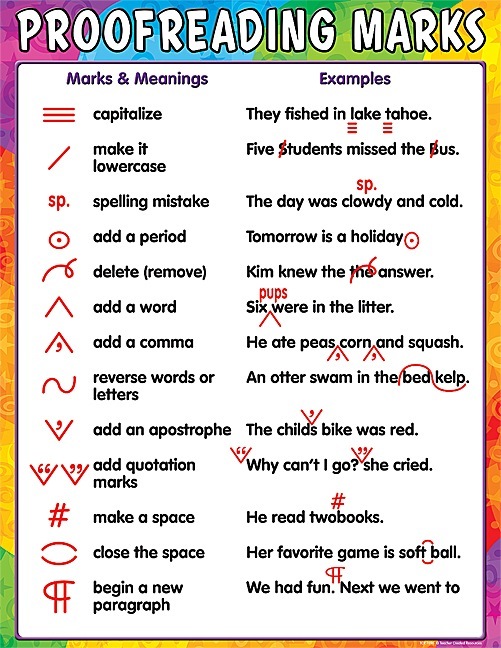
Pontificating About Proofreading


source
Producing an accurate verbatim transcript or taking a traditional steno speed test is a three-pronged effort. First, it's the machine portion (fast fingers); second is your familiarity with your CAT software & editing speed/skill; and third, the most often overlooked part, proofreading.

Proofreading, while being sometimes terribly boring, accounts for an important part of transcript production and/or passing a speed test where you're allowed to edit.

When I was taking my 225s in school, I began proofing from paper prior to turning in my tests when I had time during the allowed 1 hour and 15 minutes. I think that had a large part to do with getting my tests passed when I knew I had the required speed. Every potential error you find before your instructor/grader does could make the difference between a pass and a fail.

I was sad but not surprised to hear that with the new RTC online upload/grading method being implemented for NCRA testing, not many people brought in their printers so they could proof from hard copy. I know it's a total pain to schlep your printer in, but it's so worth it to proofread from paper!

/rant

On a personal, semi-unrelated note, proofreading's also the reason, at the time of publication of this post, I had a hard time reading for pleasure. Case in point: I read The Time Traveler's Wife, which is a great story about love that stands the test of time and tribulations, but I couldn't stop thinking how it could be better punctuated! It just goes to show that everybody does things a little differently when it comes to the written word. I've since gotten back into reading for pleasure again, though, which feels really good.

Sun Tea How-to


How may a thirsty steno aficionado wet their parched throat after a marathon practice session or stress-busting weekend hike in the woods? Plain water's so 2011, and Powerade is so 2006. Well, tea is my favorite hydrating drink other than water. Earl grey and oolong varieties warm me up during the cooler months, and when spring and summer arrive with their breezes and bright sun, refrigerated herbal sun tea is where it's at.

Free Shorthand Dictation for Practice


Due to popular demand, here's another post for you steno and shorthand lovers with which to hone your skills. See below for links to some free audio dictation.

A course to get you started on the basics. Great for practicing individual letters for finger drills and common words practice. Can't remember if I've posted this link before. If so, well, here it is again. Pitman Training Audio Dictation Library  (broken link)

Not sure who to credit this to, but check this link out for practice material. A wide variety of subjects, including dictation specific to different categories, including legal phrases, banking phrases, insurance phrases and the like. Dictation Passages

Edit: The following is a broken link, but I'm leaving this here in case it's hosted on other podcast platforms or you'd like to search for it in a different way. Courtreportingredlion is posting again! I see lots of end-of-school speeds here ranging from 140 wpm to 225 words per minute.

That should keep you practicing for a while.

Done already? Okay. There's more free dictation here and here and here.

Free Steno Practice Material

Just a quick postaroo here about a great YouTube channel that's been brought to my attention. It contains a bunch of free practice material and videos about court reporting technique. Check it out!

Breck225's YouTube channel

Dirty Secrets

Source

I have a dirty secret: I have conflicts and slop in my dictionary.
There. I feel better now with that off my chest.

They had us doing realtime pretty much right out of theory at the school I went to, so having perfect notes and being conflict-free was stressed. That's a great teaching style, and I agree with it, especially in early speeds. You're more likely to pass tests if your fingers have been trained to go to the right keys and when you don't accept sloppy writing.

That said, there came a point in my 190s, I think, where I started adding to a separate slop dictionary my repeated keying mistakes in order to make defining my untranslates and editing easier. In the 210s or so, a few teensy-weensy conflicts crept in, and I have no* idea how they got there. *some

But this dictionary atrocity is what helped me pass tests and get through the last leg of school. In addition to lots of daily high-speed practice, of course. I'd much rather have two or three choices while editing to figure out what I meant to write there. I'd prefer to have my CAT software translate my common slop instead of fumbling around trying to find out what that word's supposed to be.

Just be cautious, is my advice. And don't take my advice blindly, either. Any of it. Every stenographer is different.

Lipreading For Improved Comprehension

As you may or may not know, I'm a CODA or child of (a) deaf adult, so I have a special place in my heart for the hearing impaired community, especially lipreaders like my mom. As a kid, lipreading was occasionally used as a sort of secret code when plotting surprises or secret plans. In addition to knowing enough lipreading to be dangerous, I also credit closed captioning on television for helping me learn to read at a young age and fostering my love for the English language. I'm thankful for growing up as a CODA.

It occurred to me the other day while I was taking down a deposition at our office that I understand the words a witness is saying so much easier when I'm watching their mouth as they're speaking. This is also the same reason that understanding someone with a mustache is sometimes difficult. Lipreaders have been used in important roles throughout history, including allegedly cheating in American football for the New England Patriots.

Anyone who's fluent in a language can probably lipread to some degree. It's especially helpful in determining what cuss word was said when they bleep it out on TV. But how does one improve their lipreading skills? Honestly, I'm not sure other than making it a habit to watch people's lips while they speak and correlating the two. It eventually does get easier. If that doesn't work for you, there are also people out there who teach classes on it.

I've compiled this list of links for those that want to undertake the task of improving their lipreading skills, though many may have luck with teaching themselves to lipread, as I did, just by watching others. Anyway, the long and short of it is, in non-technical terms, that making certain sounds goes along with a specific thing the mouth does, movementwise. Or Wikipedia, my super reliable source, defines it as the technique of understanding speech by visually interpreting the movements of the lips, face and tongue with information provided by the context, language, and any residual hearing. 

See below for a visual example.


Lipreading links I love (also alliteration)

Lipreading (or Speechreading) lots of good links and info!

How to Read Lips actually some good tips on learning to lipread, especially for a wiki

Speechreading (Lip-reading) interesting article about lipreading or speechreading


YouTube Videos on lipreading

Lip Reading Program Available Online free video with sounds that teaches some of the basic sounds

Lip Reading Lesson 1 video without audio. Great for testing your skills!

Lip Reading Lesson 2 another video without audio.

Lip Reading Lesson 3 still another video without audio. Same people as the two before. Actually, they have a ton of these videos on there, and you can see the entire list if you click on the dropdown box right below the title of the video that says (currently) 279 videos. That should keep you busy.

Charlie's Lip Reading Challenge this one's kind of cool, with audio in parts and without audio for the challenge portions

heidijwalsh's Channel a group of lipreading lessons and practice videos


So the moral of the story is watch your witness at all times without being creepy!

There's lots more out there about the valuable skill of lipreading, and this is just enough to get your feet wet. I hope this helps you understand your witnesses better and make steno easier on you!